Cooperating for better care.

Medicaid

Tag Archives

Review of some state care-integration initiatives

Here’s a very useful review by the Center for Healthcare Strategies of  states’ innovative initiatives to  integrate primary, acute,  behavioral and long-term care while aligning Medicare and Medicaid financing.

More than 10 million people in the U.S. are dual-eligible beneficiaries, and are often among the highest-need, highest-cost population.

For example, as of this month, 10 states had launched capitated demonstrations. Two states have launched managed fee-for-service demonstrations. And Minnesota has signed an agreement with the Centers for Medicare & Medicaid Services (CMS) for an alternative model focused on administrative alignments.

 Among the innovations:
  • Offering Medicare and Medicaid benefits within a single health plan.
  • Providing all-inclusive care for the elderly.
  • Managing long-term care and services and support.
  • Aligning enrollment, benefit and coverage notifications for patients and providers.

The report says:  “States are taking advantage of unprecedented federal support as they advance alignment of Medicare and Medicaid services for dually eligible beneficiaries. States and their federal partners will continue to refine the opportunities described here and possibly develop other alternative pathways.”


A rural Texas hospital comes back from the brink


fburg

By SARAH VARNEY

For Kaiser Health News

FREDERICKSBURG, Texas

Brad and Sheryl Kott didn’t think much of it seven years ago when their 13-year-old son, Quinn, complained his arm felt tingly. But later that day, Mr. Kott found Quinn — a friendly, energetic athlete — on the bathroom floor. His speech was garbled.

“We loaded him in the back of our pickup in the second seat, and we start heading to town to the emergency room right away,” Brad Kott recalled. “And on my way, my wife said, ‘I think he’s had a stroke.’”

After the family arrived at Hill Country Memorial, the local hospital in Fredericksburg, the Kotts say Quinn’s medical care went terribly wrong. Quinn waited in a wheelchair in the emergency room for hours despite his drooping face and slurred speech, and his parents and former hospital administrators say, the ER doctor was inattentive, callous and at a point late in the evening, decided to send Quinn home.

As Brad Kott brought his son out to his truck in the parking lot, his wife refused to take their son home. She rushed back into the ER and demanded to see the doctor.

“I met the doctor coming down the hall, and I said, ‘Something is wrong with Quinn.’ And he shushed me,” Sheryl Kott recalled. “And I said, ‘No, don’t you tell me to shush. You’re the doctor. I’m the mom. There’s something wrong with my son and I need to know what’s wrong with my son, and we are not taking him home.’”

It wasn’t until the next morning that a pediatrician finally examined Quinn. He was rushed to a hospital in San Antonio, about 70 miles south, and died soon after. He had suffered a massive stroke.

For Dr. Michael Williams, then Hill Country Memorial’s chief executive officer, Quinn Kott’s death in 2009 was a crucible moment.

“We had a clear opportunity to either do what most hospitals do and what we had done previously, which was get our attorneys involved, be prepared for a lawsuit,” Williams said. “Or we could take a different approach and work directly, reach out to the family and ask them to partner with us in really transforming the hospital.”

In truth, the hospital’s problems went well beyond the emergency department. “The hospital was in the red on an annual basis,” said Williams, who is now president of the University of North Texas Health Science Center, in Fort Worth. “The patient satisfaction was very low. The employee satisfaction was very low. And across the board, what we heard from people, was that this used to be the community’s hospital, and now people are leaving the community to go get their care elsewhere.”

Yet fixing the problems would not be easy because the troubled hospital in Fredericksburg was caught up in larger forces.

Since 2010, more than 50 rural hospitals have closed across America and hundreds more are in fragile financial condition. Rural populations have declined, and, in many places, those that remain are largely elderly or uninsured. At the same time, congressional budget agreements and the Affordable Care Act reduced Medicare reimbursement and subsidies for the uninsured. Many rural hospitals have been unable to withstand the revenue losses.

The hospital in Fredericksburg, a town of about 10,000 deep in the heart of Texas Hill Country, could easily have faced a similar fate.

Despite the area’s live music scene and strong tourist economy, the hospital was the town’s largest employer and cherished for much of its history. When it opened in 1971, 93 percent of the county’s households contributed money — including Quinn Kott’s grandparents — and old photographs show thousands of people lined up to have a first look.

Years later, as the hospital faced the crisis of Quinn Kott’s death, Williams was determined to bring back that spirit. He studied the Toyota plant in San Antonio and hired former Toyota employee Jeff Darnaby to help bring the car company’s revered assembly line principles to Hill Country Memorial.

“The Toyota production system basically allows you to identify waste, and remove that waste from your processes,” Darnaby said. “Anything that doesn’t add value to the customer, to the process, is considered waste.”

Today at Hill Country Memorial, each department candidly displays specific goals for everyone to see: reduce ER wait times, eliminate falls and improve customer satisfaction. In addition to Toyota, Williams turned to a former executive with Southwest Airlines to remake the hospital’s values and culture, and he hired a former trainer from Ritz Carlton, known for its legendary customer service, to change how patients and families were treated.

“We took the approach that if we took patients and we treated them better than they’d ever been treated before, that at the end of the day, they would drive the bottom line,” said Williams.

Seven years after Quinn’s death, Hill Country Memorial now ranks among the top 100 hospitals in the country and recently won the nation’s highest presidential honor for excellence through innovation and leadership.

The sweeping changes can be seen everywhere: staff members, including physicians, greet visitors in the hallway and ask if they need directions; during a daily afternoon quiet time, the hallway lights darken so patients can rest; and the kitchen staff, in an attempt to reduce waste, cut their egg budget in half. Along with other cost saving measures, the hospital cut costs by $600,000.

Emily Padula, the hospital’s chief strategy officer, says whatever the goal — reducing costs, growing market share, perfecting customer service — rural hospitals should not think they need a lot of money to improve. “We found that our costs are about the average for the country for a hospital, employee staffing is about average for the country, and yet our patient satisfaction is in the top 5 to 10 percent of the nation. So it’s not that you have to put in place all these fancy things to make a difference,” Padula said.

In response to trends affecting hospitals across the country — fewer in-patient visits, declining Medicare reimbursement and Texas officials’ refusal to expand Medicaid — Hill Country Memorial employees stake out new lines of business in weekly meetings in the so-called War Room. Those efforts have led the hospital to diversify its offerings to include a breast health center with high-tech imaging, home hospice care and a wellness center.

To capitalize on the abundance of Medicare-insured retirees in Texas Hill Country, the hospital developed a well-regarded hip and knee replacement program that has attracted patients like George Brannies, a fifth generation Texan from the nearby town of Mason. After a riding accident a few years ago, Brannies, 72, sought care from a renowned surgeon in San Antonio. When the hip surgery failed, the rancher and bank chairman decided to try Hill Country Memorial. His surgeon and nurses were so exceptional, Brannies said, that he was back on his horse in four weeks.

“They take such good care of you. It’s like doing business in a small-town bank. They give you their cell numbers. They say now if you have a problem, you call us. Try this with one of those big-city hospitals. It doesn’t happen,” he said.

Brannies’s surgeon, Dr. Chuck Romanick, has helped steer Hill Country Memorial’s hip and knee replacement program to more than 400 surgeries a year.

“In this community, if you do a bad job, everybody knows about it,” Romanick said. “You will see your bad jobs down at the grocery store or whatever, so you have to focus on quality. And that’s, I think, what we’ve done.”

Now the hospital markets its nationally recognized program well beyond the Texas Hill Country.

Jayne Pope became chief executive officer of Hill Country Memorial in 2013, and she attributes much of the hospital’s success to its fervent and never-ending focus on improving patient care.

“We know as a rural center, we can’t do everything,” Pope said. “But what we do, we determine what those core competencies are, and invest in those skills so that our patients have the best of care.”

But not every rural hospital can replicate Hill Country Memorial’s success.

Len Nichols, a health economist at George Mason University, in Fairfax, Va., says many small towns simply can’t sustain an acute-care hospital.

“We probably have roughly 20 to 30 percent more hospitals beds than we actually need and so who’s going to lose in the long run?” said Nichols. “It’s going to be those hospitals that are the least efficient, those who cannot deliver good, quality services for the lowest possible cost.”

Instead, the dozens of rural hospitals that have closed — and hundreds more at risk — should consider converting to urgent care centers and partnering with larger regional hospitals, Nichols said, to allow rural residents to be stabilized and moved quickly to hospitals where doctors often have more expertise.

The changes at Hill Country Memorial came too late for the Kott family. They’re still haunted by the treatment that Quinn received and the hospital’s advertising campaign that trumpets its care as “remarkable.”

“At first it makes me sick to my stomach, because the hospital was not remarkable at all. It just, it tears at you when you see a billboard that says that,” Brad Kott said. “However, I know that it has transformed into that, and it makes me proud that people in my community took a bad situation, took our tragedy and worked to turn it around.”

This story was reported in collaboration with PBS NewsHour producer Jason Kane.


Conn. hospitals say they’re trapped

yale

The Yale-New Haven Medical Center, centerpiece of Connecticut’s biggest hospital system.

A story in The Connecticut Mirror reported on by Becker’s Hospital Review says  that Medicaid reimbursement cuts and increased taxes are pushing Connecticut’s independent hospitals to  try to join larger systems even as they face with restrictions on health-system growth in the Nutmeg State.

Adding to hospitals’ financial strain, Connecticut Gov. Dannel  Malloy’s administration  has delayed about  $140 million in payments to acute-care hospitals.

And Governor Malloy issued an executive order instructing the Connecticut Department of Public Health to delay final decisions on big hospital mergers or other affiliations until 2017.

Stress-filled days for Connecticut’s hospital executives!


Expanded Medicaid eligibility in Flint lead crisis


flintriver

The Flint River, corrosive water from which went through lead pipes to poison thousands of people.

In response to the lead-in-water crisis in Flint, Mich.,  the U.S. Department of Health and Human Services (HHS) gave formal approval to Michigan Gov. Rick Snyder’s proposal to expand Medicaid eligibility and coverage for low- and moderate-income children and pregnant women affected by Flint’s lead crisis.

Thus, the Commonwealth Fund reports, “Medicaid will be extended to an additional 15,000 lead-exposed children and pregnant women served by the Flint water system. Once eligibility is established, children will remain eligible until they reach age 21. This expanded eligibility standard effectively doubles the state’s normal Medicaid eligibility rules for Flint’s pregnant women and children, raising it from twice to four times the federal poverty level. (Families with incomes above this level can purchase Medicaid coverage.)

“Both existing and newly eligible beneficiaries will be entitled to receive all Medicaid benefits, including comprehensive pregnancy care, and early and periodic screening, diagnosis, and treatment (EPSDT) services to promote healthy child development.”


Study: Trump healthcare plan would double number of uninsured


A new analysis  from the bipartisan Committee for a Responsible Federal Budget found that Donald Trump’s plan to repeal and replace the Affordable Care Act would nearly double the number of Americans without health insurance.

Mr. Trump wants to repeal the ACA and replace it with several new policies, including  converting Medicaid to a block grant program for each state to determine how to spend.

Becker’s Hospital Review says that “with current policies in place, 27 million Americans will lack health insurance coverage in 2018, according to projections from the Congressional Budget Office. Fully repealing the ACA would increase that number by another 22 million. Using previous CBO estimates, the CRFB said Mr. Trump’s replacement plan would only cover 5 percent of those 22 million people, meaning about 21 million would lose insurance coverage.”

“The CRFB said block granting could lead to a wide range of savings, but more details are needed to evaluate that portion of Mr. Trump’s plan. The plan calls for converting Medicaid into block grants, but it does not include details on how big the block grants would be.”


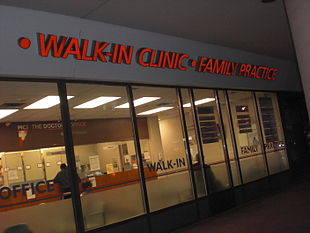
Retail clinics might be adding to nation’s medical costs

clinic

By CHAD TERHUNE

For Kaiser Health News

Retail clinics, long seen as an antidote to more expensive doctor offices and emergency rooms, may actually boost medical spending by leading consumers to get more care, a new study shows.

Rather than substituting for a physician office visit or trip to the hospital, 58 percent of retail clinic visits for minor conditions represented a new use of medical services, according to the study published Monday in the journal Health Affairs. Those additional visits led to a modest increase in overall health care spending of $14 per person per year.

“This challenges the conventional wisdom that retail clinics save the healthcare system money,” said Dr. Ateev Mehrotra, a co-author of the study and an associate professor of healthcare policy at Harvard Medical School. “The increase in spending from new utilization trumps the savings we saw from replacing doctor visits and the emergency department.”

There are more than 2,000 in-store clinics nationwide, and they handle about 6 million patient visits annually, the study said.

They are popular with many consumers who like strolling in for care with no appointment, as opposed to waiting hours elsewhere, and they are open seven days a week. These small clinics are typically run by nurse practitioners and treat infections, mild sprains and handle other preventive care such as immunizations.

CVS Health Corp.’s MinuteClinic is the industry leader with more than 1,100 locations. Many health insurers and employers encourage people to use these clinics, in some cases waiving co-payments.

But Mehrotra said policymakers and health insurers should realize that promoting more convenient options, from retail clinics to online doctor visits, may spur more use and higher costs.

“As we make things more convenient people will use it a lot more,” said Mehrotra, also a researcher at Rand Corp., a nonprofit think tank in Santa Monica, Calif.

The study doesn’t contradict earlier research that found retail clinics provide care that costs 30 to 40 percent less than similar care provided at a physician’s office and that the treatment for routine illnesses was of similar quality. But it suggests those savings are more than offset by increased use of medical services.

Dr. Andrew Sussman, president of the MinuteClinic unit at CVS, criticized the study as “flawed” and too reliant on old data. He said about half of MinuteClinic patients don’t have a regular family physician and his clinics are able to prevent minor conditions from becoming major illnesses requiring costlier care.

The study “is not an accurate assessment of retail clinic cost savings and value,” Sussman said. “It is a step backward to think of people who did not have a primary-care physician and get care as excess utilization.”

The study’s authors couldn’t assess the impact retail clinics have on overall medical use and total spending because they didn’t have data on inpatient care or prescription drug use — two large components of healthcare spending.

The researchers looked at data on 3 million Aetna Inc. members from 2010 to 2012 and their medical use tied to 11 low-acuity conditions, such as sinusitis and urinary-tract infections. The patients were divided between users of retail clinics and people who did not visit them.

Aetna, the nation’s third-largest health insurer, said it remains supportive of retail clinics and looks forward to further studies examining the longer-term impact on costs and patient outcomes. In particular, Aetna and other health care purchasers want to know if retail clinics can help diabetics and others battling costly chronic illnesses.

“Retail clinics are a convenient and flexible option that are available during extended hours, while traveling, and for minor health needs,” the company said in a statement. “They are also a good option for consumers who do not have a primary-care physician.”

In this latest study, researchers found that much of the new use was for ailments that typically cleared up on their own, such as a fever, cough or runny nose. But Mehrotra said he doesn’t want the study to be seen as criticizing people for seeking medical help. Rather, he wants to emphasize that convenience is going to increase utilization.

“If the retail clinics wouldn’t have been around, people would have stayed home,” he said. “New utilization accounts for most retail clinic visits.”

The researchers noted some limitations to the study. It was confined to the commercial insurance population, excluding people on Medicare, Medicaid or the uninsured. It didn’t factor in benefits such as the time saved by going to a retail clinic.

And Mehrotra said this study focused on the initial visit. It looked at whether it was new utilization or replaced a more expensive option. Among visits deemed to be substitution, 93 percent replaced a doctor visit and 7 percent were in place of going to an emergency room.

Tom Charland, an industry analyst and chief executive of research firm Merchant Medicine, said retailers have had mixed results with these in-store clinics. CVS and Kroger continue to open new locations while Wal-Mart Stores Inc. and Target Corp. pulled back on the business after lackluster results, he said.

These clinics have been seen as one way to address a lack of primary-care doctors in some areas of the country as the federal health law expands insurance coverage to millions of Americans. Some major health systems, including the Cleveland Clinic and UCLA, have partnered with retail clinics to help meet the increased demand.

Sussman said about half of MinuteClinic patients are seen on weekends or during evening hours when most physician offices are closed. “The Affordable Care Act is bringing millions of new patients into the system, and it’s necessary to provide alternate types of care,” Sussman said.

But Mehrotra said health plans and employers should carefully consider how they cover care at retail clinics. “If the goal is to lower costs,” he said, “then encouraging use of retail clinics may not be a successful strategy.”


Don’t skimp on RCM systems


Even financially struggling hospitals need to update their revenue-cycle-management systems in order to work with multi-provider bundles, shared savings or other complex payment models.

Jay Sultan, principal strategy adviser at Edifecs, a health IT company, told Becker’s Hospital Review that using  antiquated RCM systems to add the new data sources and analytics needed to validate inbound revenue is like “trying to deliver the functionality of a modern EHR using a typewriter.”

“Payment reform is driving CMS, Medicaid and commercial payers to alter the revenue cycle, with a larger portion of provider revenue driven by performance elements outside of a traditional RCM system’s capability,” he added.

He told the news service that hospitals should prioritize technology investments based on bottom-line projections. In some hospitals,  he said, “current RCM technology and the processes that it drives are so antiquated that maintaining the system costs more than the revenue assurance/enhancement it delivers.”


Trump’s seven-point healthcare program


The Trump for president campaign offers a seven-part healthcare-reform program:

  1. “Completely repeal Obamacare. Our elected representatives must eliminate the individual mandate. No person should be required to buy insurance unless he or she wants to.
  2. “Modify existing law that inhibits the sale of health insurance across state lines. As long as the plan purchased complies with state requirements, any vendor ought to be able to offer insurance in any state. By allowing full competition in this market, insurance costs will go down and consumer satisfaction will go up.
  3. “Allow individuals to fully deduct health insurance premium payments from their tax returns under the current tax system. Businesses are allowed to take these deductions so why wouldn’t Congress allow individuals the same exemptions? As we allow the free market to provide insurance coverage opportunities to companies and individuals, we must also make sure that no one slips through the cracks simply because they cannot afford insurance. We must review basic options for Medicaid and work with states to ensure that those who want healthcare coverage can have it.
  4. “Allow individuals to use Health Savings Accounts (HSAs).  {Editor’s note: These are already allowed — and used by millions.} Contributions into HSAs should be tax-free and should be allowed to accumulate. These accounts would become part of the estate of the individual and could be passed on to heirs without fear of any death penalty. These plans should be particularly attractive to young people who are healthy and can afford high-deductible insurance plans. These funds can be used by any member of a family without penalty. The flexibility and security provided by HSAs will be of great benefit to all who participate.
  5. “Require price transparency from all healthcare providers, especially doctors and healthcare organizations like clinics and hospitals. (Editor’s note: Such transparency is already called for under the Affordable Care Act.} Individuals should be able to shop to find the best prices for procedures, exams or any other medical-related procedure.
  6. “Block-grant Medicaid to the states. Nearly every state already offers benefits beyond what is required in the current Medicaid structure. The state governments know their people best and can manage the administration of Medicaid far better without federal overhead. States will have the incentives to seek out and eliminate fraud, waste and abuse to preserve our precious resources.
  7. “Remove barriers to entry into free markets for drug providers that offer safe, reliable and cheaper products. Congress will need the courage to step away from the special interests and do what is right for America. Though the pharmaceutical industry is in the private sector, drug companies provide a public service. Allowing consumers access to imported, safe and dependable drugs from overseas will bring more options to consumers. (Editor’s note: Many  U.S. patients now get their  prescription drugs from Canada, which are generally much cheaper than American drugs.}


Deconstructing Oregon Medicaid reform

This JAMA article looks at successes and challenges in Oregon’s three-year-old and nationally watched effort, through Coordinated Care Organizations, to reform its Medicaid program to improve healthcare access and population health while slowing increases in spending.


Ga. hospitals form alliance to press for Medicaid expansion

georgiacapitol

Georgia State Capitol.

Hospitals across Georgia have formed an alliance to address what are grave fiscal crises for many of them. The key goal is expanding Medicaid in the state –a  tough task in  Republican-dominated Georgia.

Becker’s Hospital Review noted that for “many years, many Georgia health facilities offset the cost of caring for the uninsured with Disproportionate Share Hospital payments. However, the Affordable Care Act calls for those payments to be phased out, and since Georgia has not expanded its Medicaid program, the state still has more than 400,000 uninsured residents, according to Atlanta Magazine.”

DSH payments are slated to end Jan. 1, 2018, and the loss of those funds is a cause of concern for large and small hospitals alike.”

Even large hospitals, such as Grady Memorial Hospital, in Atlanta, are  worried.  Consider that Grady’s mental-health clinic could be forced to close if it  can’t offset the loss of DSH payments.


Page 14 of 24First...131415...Last

Contact Info

info@cmg625.com

(617) 230-4965

Wellesley, MA